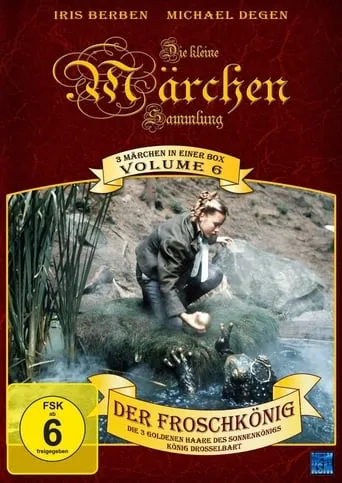
A selfish self-centered widowed ruler, barely tolerated by his subjects and called appropriately enough, 'King Myself, First' asks his three daughters to name the measure of their love for him. When one of them says, "more than salt", he banishes her from the kingdom. Not understanding what she meant the King assumes love can only be measured by precious metals or one's own talent, the 'correct' answers from his other two daughters. The arrogance of the King leads him to gather all the salt in the kingdom and destroy it. Of course, this backfires as he slowly learns the universal value of the substance, and of course, the essence of his daughter's reply. With the help of the wise and magical old 'herb woman', the King also learns what it means to be a true and wise ruler.
Acting
Jan Werich's operatic selfishness—part buffoon, part tragedy.
Production
1955 Czech fairy-tale aesthetic: ornate, slightly unhinged, utterly sincere.
Writing
The salt metaphor: simple, devastating, universally understood.
Director
Bořivoj Zeman

Jan Werich
král Já I.
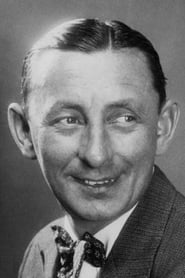
Vlasta Burian
kancléř Atakdále

Irena Kačírková
princezna Drahomíra

Stella Májová
princezna Zpěvanka

Milena Dvorská
princezna Maruška

František Černý
kuchař
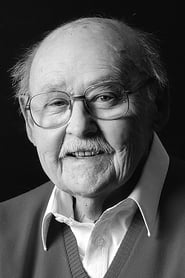
Lubomír Lipský
princ chrabrý, syn Děloslava VIII.
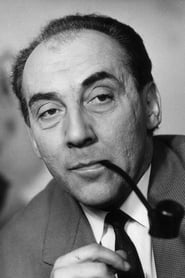
Miloš Kopecký
chytrý princ

Miroslav Horníček
princ krásný, syn Alabastra XVI.
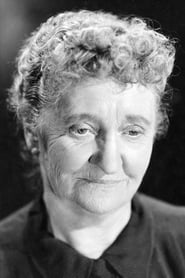
Terezie Brzková
stařenka kořenářka
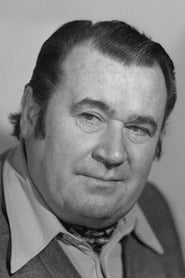
Zdeněk Dítě
zahradník

Josef Pehr
dudák

Vladimír Ráž
rybář

Marie Glázrová
vdova Kubátová, podruhyně

Fanda Mrázek
celník Martínek
Trivia, insights & behind the scenes
Jan Werich was a beloved Czech comedian and satirist; casting him as a tyrant was deliberate national irony.
The salt motif draws from European folklore where salt symbolizes both preservation and the inescapable—without it, society itself decays.
No ratings yet
Sign in to join the discussion — comments are spoiler-gated to your watch progress.
Discussion starters





 XC
XC