
The bomb meets Scheherazade: one conductor, two atomic masterworks, zero interval snacks required.
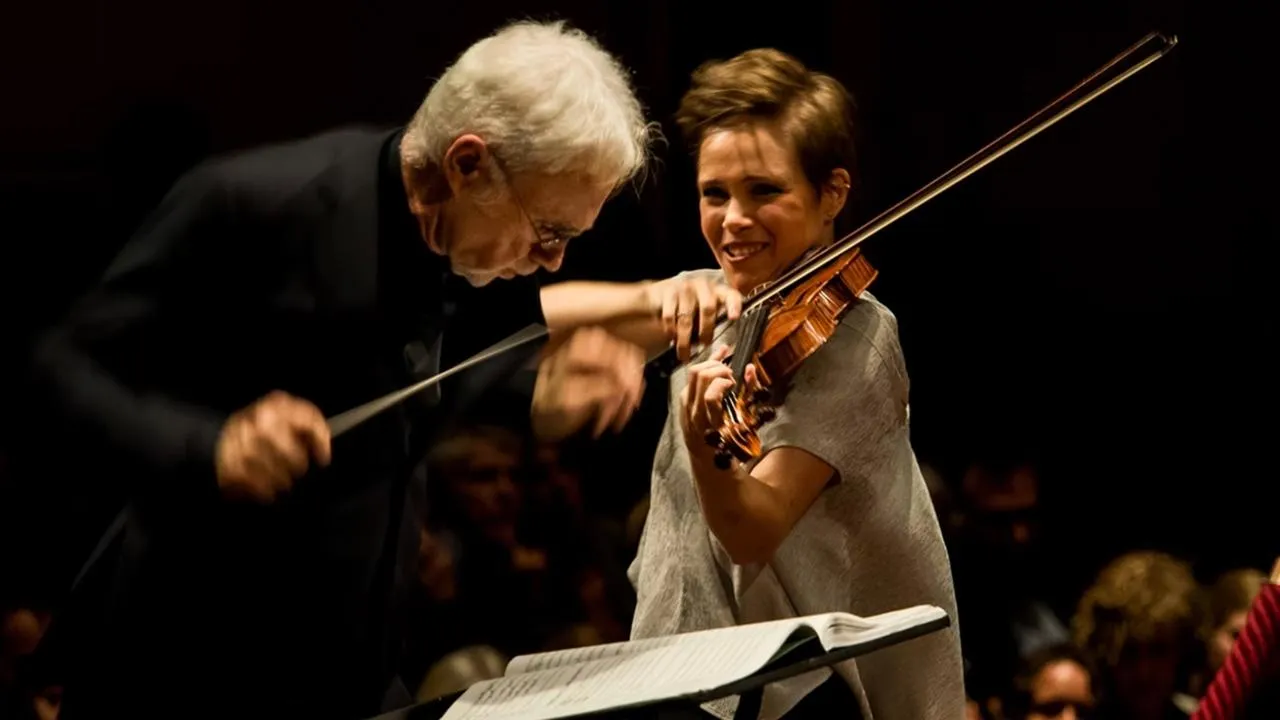
Like many of John Adams’ operas, Doctor Atomic is based on recent world historical events—here, the effusive Robert Oppenheimer, “father of the atomic bomb,” anxiously awaits the bomb’s first test in Los Alamos, New Mexico. Adams adapted the work into a symphony, comprising its three main acts. In the second half of the program, Adams conducts his 2015 violin concerto, Scheherazade.2, which restages the tale of the One Thousand and One Nights heroine as a strong woman navigating a patriarchial society, incarnated by the solo violin part. The work was composed specifically for Canadian-American virtuoso Leila Josefowicz and co-commissioned by the Royal Concertgebouw Orchestra, who perform it to perfection. The evening then closes out with Tromba Lontana, an orchestral fanfare written to mark the 150th anniversary of Texas’s independence from Mexico in 1836.
Direction
Kuijs captures Adams' twitchy, precise conducting style intimately
Acting
Josefowicz plays Scheherazade like she's fighting for her actual life
Score
Doctor Atomic's 'Batter my heart' aria will haunt your dreams

Director
Dick Kuijs


Trivia, insights & behind the scenes
Adams originally wanted Doctor Atomic to end with an actual mushroom cloud video projection; Peter Sellars convinced him the music alone was devastating enough.
Scheherazade.2 was Adams' direct response to the 2012 'war on women' rhetoric in US politics, making the ancient frame tale urgently contemporary.
No ratings yet
Sign in to join the discussion — comments are spoiler-gated to your watch progress.
Discussion starters

 US
US